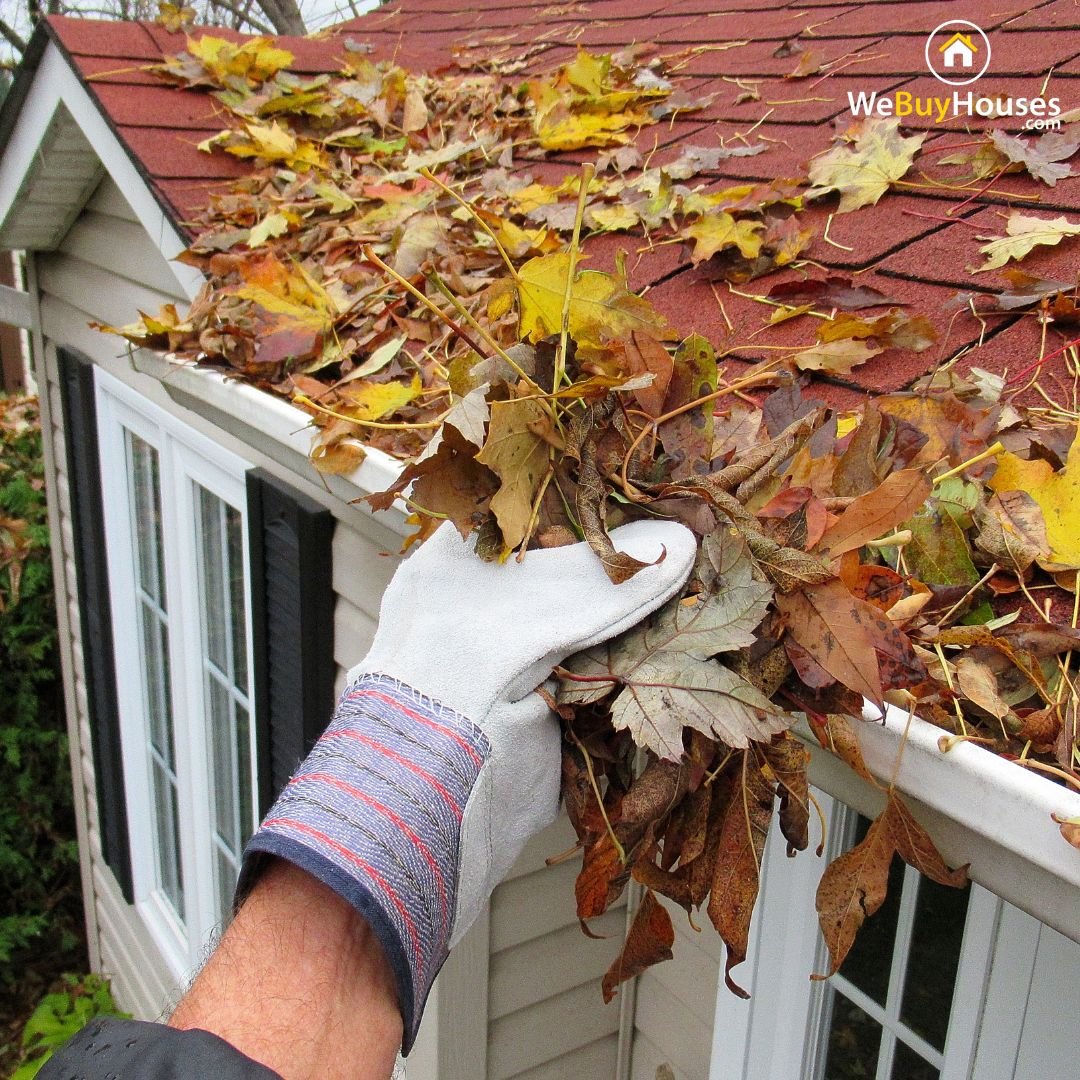
Autumn in Virginia is hard to beat. The leaves along the Rappahannock in Fredericksburg turn brilliant red and gold, the Blue Ridge puts on a show for homeowners in Culpeper and Fauquier County, and the neighborhoods in Henrico and Chesterfield fill with color. The problem is every single one of those leaves eventually lands in your gutters. What starts as a minor inconvenience quietly turns into a foundation leak, a rotted fascia board, or an ice dam that costs thousands to fix come February.
The good news is that cleaning your gutters takes about two hours and costs almost nothing if you do it yourself. This guide covers exactly how to do it, what to look for while you’re up there, and what to do if you discover the gutters are the least of your problems.
Why Virginia Homeowners Need to Clean Gutters Every Fall
Most homeowners treat gutter cleaning as optional. In Virginia, it really isn’t.
The seasonal shift from fall to winter moves fast across the state. Leaves pile up through October in Richmond and Fredericksburg, and a little later in Orange County and Louisa County where the tree cover runs heavy. Then November arrives with freezing rain and the occasional early snow. When gutters are packed with debris during that first hard freeze, water backs up under your shingles and expands as ice forms. That process, known as ice damming, causes roof damage that typically runs between $1,500 and $7,000 to repair.
Beyond the roof, overflowing gutters dump water directly against your foundation. Virginia’s clay-heavy soil, common throughout Stafford County, Prince William County, and much of central Virginia, holds moisture rather than draining it quickly. Over time, that persistent water creates hydrostatic pressure against basement walls, leads to crawl space moisture problems, and in serious cases causes foundation shifting. It also attracts termites, which stay active in Virginia nearly year-round.
Cleaning gutters twice a year prevents all of that. It’s one of the highest-return maintenance tasks a Virginia homeowner can do.
What You Need Before You Start
Gather everything before you climb the ladder. You will need a sturdy ladder with a stabilizer arm, work gloves, a gutter scoop or garden trowel, a five-gallon bucket with a hook, a garden hose with a spray nozzle, and a plumber’s snake for stubborn downspout clogs. A leaf blower with a gutter attachment helps if you have long gutter runs with dry debris, which is common on older homes throughout Hanover County and Caroline County.
Do not lean your ladder directly against the gutter itself. The stabilizer arm keeps the gutter intact and keeps you from slipping. It’s worth the extra setup time.
How to Clean Your Gutters Step by Step
Start on the roof, not the gutter. Before touching the gutters, blow or rake debris off your roof first. Otherwise the next rainfall simply washes everything back into the clean gutters and you’ve wasted your afternoon.
Next, work from the far end toward the downspout. Scoop debris into your bucket rather than knocking it onto your landscaping or foundation bed below. Wet leaves are heavier than you expect, so work in small sections rather than trying to clear a long run all at once.
Then flush with your hose after clearing the bulk of debris. Start at the far end and watch how water flows toward the downspout. If it pools anywhere along the way, the gutter pitch needs adjusting. That usually means repositioning a few gutter hangers, which takes about 15 minutes with a screwdriver.
After that, check the downspouts separately. Run your hose directly into the top of each one. If water backs up instead of flowing through cleanly, you have a clog. Feed a plumber’s snake down from the top to break it loose, or try flushing from the bottom up with strong water pressure.
Finally, check where the downspouts actually drain. This step gets skipped constantly. Virginia’s clay soil does not absorb water quickly, so your downspouts need to direct water at least four feet away from your foundation. If they’re dumping water right against the house, add a downspout extender. They run about eight dollars at any hardware store and take five minutes to install.
What to Inspect While You’re Up There
Since you’re already on the ladder, take five extra minutes to check for problems that are far easier to catch now than after a winter storm rolls through.
Look for sagging gutter sections where hangers have pulled loose from the fascia board. Check for cracks or separations at the seams. Look at the fascia board itself behind the gutters because rotted fascia usually means gutters have been overflowing for a while. This is a particularly common issue on homes built in the 1980s and 1990s throughout Goochland County, Powhatan County, and King George County, where older construction used wood fascia that doesn’t hold up the way modern materials do.
Additionally, check a few shingles near the roofline for curling edges, missing granules, or sections that have lifted. These are exactly the issues that show up on home inspection reports and slow down or kill traditional sales in Virginia. If you find significant damage, our guide to Virginia home inspection deal killers is worth reading before you decide what to do next.
Should You Install Gutter Guards?
Gutter guards reduce how often you need to clean but do not eliminate the need entirely. Mesh guards work well for large leaf debris but tend to clog with pine needles and shingle granules over time. If your yard has significant tree coverage, as many properties do in Orange County and Louisa County, gutter guards are a reasonable long-term investment. If you have a mostly open yard, regular twice-yearly cleaning is sufficient and much cheaper.
When to Hire a Professional
Hire a professional if your home is more than one story, if the roofline has complex angles or dormers, or if you’re simply not comfortable on a ladder. Professional gutter cleaning in Virginia typically runs between $100 and $225 for a single-story home and $150 to $350 for two stories. Most companies also provide a basic inspection report, which is useful documentation if you’re planning to sell.
What If the Gutters Are the Least of Your Problems?
Sometimes you get up on that ladder and realize the gutters are just the beginning. The fascia is rotted through. The roof needs replacing. Water has already been getting into the basement for longer than you realized. In Virginia, those repairs add up fast, and not every homeowner in Fredericksburg, Richmond County, Henrico, Chesterfield, or Prince William County is in a position to tackle all of it before selling.
That is exactly the situation We Buy Houses Virginia handles every week. We purchase homes as-is throughout Virginia, including properties with deferred maintenance, water damage, foundation concerns, and roofing issues. There are no repairs required, no inspections to pass, and no commissions to pay.
We can close in as little as 14 days, or on your timeline if you need more time to plan your move. Call us at (540) 787-3300 or fill out our no-obligation information form and we will get back to you within 24 hours.
Frequently Asked Questions
Twice per year is the standard. Clean them in late spring after pollen season, then again in October or early November before the first hard freeze. Homes in heavily wooded areas like Orange County and Louisa County may need a third cleaning because pine needles accumulate faster than deciduous leaves.
October is ideal for most of central and northern Virginia. Most deciduous trees drop the bulk of their leaves by mid-October in the Fredericksburg and Richmond areas, and by early November further west. Cleaning before the first freeze protects against ice dams forming through winter.
Yes, and it happens faster than most homeowners expect. Virginia’s clay-heavy soil, common across Stafford County, Hanover County, and much of central Virginia, holds water against your foundation rather than draining it. Persistent overflow creates hydrostatic pressure that causes basement wall cracks, crawl space moisture, and in serious cases, foundation shifting.
We Buy Houses Virginia purchases homes in any condition throughout Virginia including Hopewell, Colonial Heights, Culpeper, Fauquier County, and everywhere in between. You pay no commissions, make no repairs, and can close in as little as 14 days. Get a free cash offer here or call (540) 787-3300.
For single-story homes with simple rooflines, doing it yourself makes sense if you’re comfortable on a ladder. For two-story homes, complex rooflines, or homes with heavy tree coverage, professional cleaning is worth the cost and significantly safer.
We Serve Homeowners Across Virginia
We buy houses throughout Virginia including Fredericksburg, Prince William County, King George County, Caroline County, Hanover County, Henrico County, Chesterfield County, Richmond County, Colonial Heights, Powhatan County, Goochland County, Louisa County, Orange County, Culpeper County, Fauquier County, and Hopewell.
No matter where you are in Virginia, we can make you a fair cash offer within 24 hours.
Related Reading
Sell Your House As-Is in Virginia
Virginia Home Inspection Deal Killers
Hidden Real Estate Fees We Buy Houses
Cash vs Realtor Virginia Complete Sellers Guide
5 Warning Signs Your Virginia Home Might Be Hard to Sell Traditionally
Contact Us for a Free Cash Offer